Contents · 4

Every website owner and online store manager faces the challenge of growing sales and brand awareness online. Yet many entrepreneurs focus mainly on attracting traffic, investing money and time in positioning, paid advertising, content creation or influencer partnerships. All of these can increase website traffic, but without conversion optimization they don’t always lead to significant growth in actual profit.
The conversion rate is one of the key metrics for analyzing ecommerce performance. It shows the percentage of visitors who made a purchase. For example, if only one out of 100 users buys something, the conversion rate is 1%. Optimizing your website and increasing the conversion rate lets you close more sales without increasing overall site traffic.
Key Ways to Increase Your Online Store’s Conversion Rate
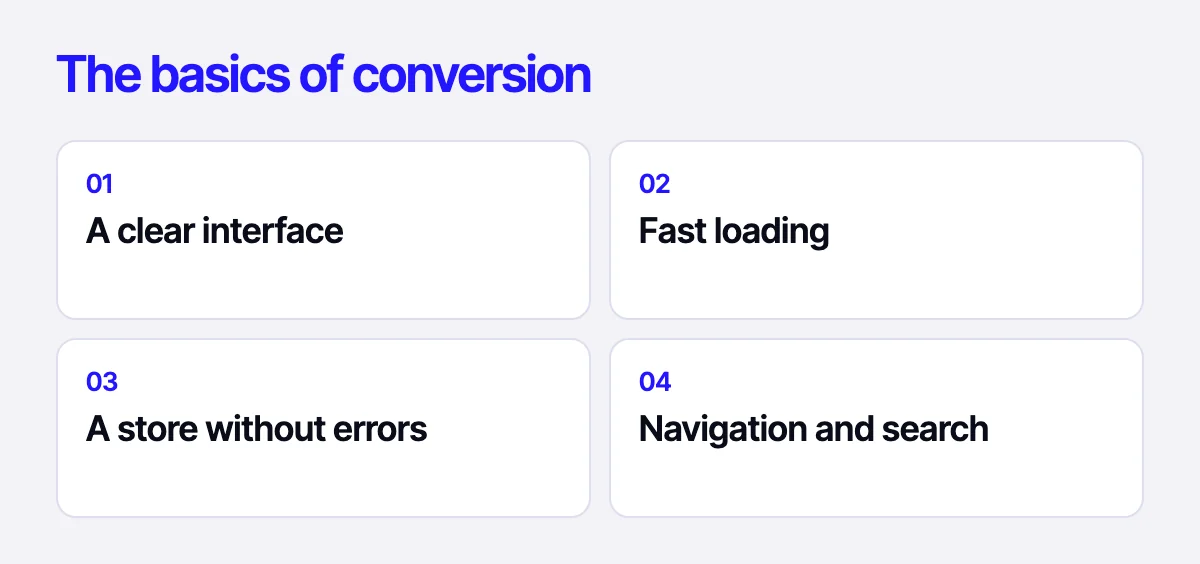
User-Friendly Interface
According to Growcode, the average conversion rate of online stores is about 2.27%, while for offline shopping it reaches about 30%. This means that customers visiting physical stores buy 10 times more often than those visiting online stores.
Traditional shopping requires much more effort from customers. When visiting online stores, users expect everything to be as friendly and intuitive as possible, with no need for complex analysis or calculations.
Fast Page Loading
Load speed is one of the key elements of web page optimization and should be addressed first. If a page takes more than 2-3 seconds to load, it can seriously hurt the user experience, especially in an online store, where users constantly move between categories, filters and products. Slow pages can drive users away from the site. Load speed also affects your rankings in search results, including Google search.
The most common causes of slow loading include heavy use of graphics (images should be optimized to minimize file size without losing quality), a large number of JavaScript and CSS files and a slow server response. To improve load speed, also consider code minification, asynchronous loading of JavaScript files and caching.
To identify possible causes of slow loading, use tools such as Google PageSpeed Insights, GTmetrix or Pingdom Website Speed Test.
A Store That Works Properly
It is vital that the website works properly, giving users easy access to products and a smooth, glitch-free way to complete their purchase. This means the site must be free of errors, and all core features, such as filtering, image display, product option selection and adding to cart, must work correctly. Even small difficulties at this stage can make a user leave the site, even if they were ready to buy.
Easy Navigation and Convenient Product Search
Simplicity and intuitiveness are among the most fundamental and critical factors affecting an online store’s conversion rate. Beyond the site’s visual appeal, which matters a great deal and can affect how long users stay, searching for and browsing products should be as comfortable and effortless as possible.
Logically organizing the site into categories and subcategories that make sense to users makes browsing products in your online store convenient. Analyzing Google Analytics data on the queries users type into your internal search will help you better understand customer needs and optimize your category structure. Sorting and filtering options also improve the browsing experience.
Responsive Design for All Devices
Most internet traffic today comes from smartphones and tablets, and this trend keeps growing. It is essential that your store’s pages display correctly at different screen resolutions and that the buying process is just as intuitive as on desktop computers.
This means that when developing and optimizing an online store, you need a responsive design that lets users comfortably browse and buy products on devices with different screens. You should also focus on easy, intuitive navigation on mobile devices to give customers a pleasant shopping experience no matter which device they use. With mobile traffic on the rise, responsiveness and mobile optimization are becoming increasingly critical to ecommerce success.
Correct Page Display on Mobile Devices
All the functionality available in the desktop version of your online store should stay consistent with the mobile version. Keep in mind that this also affects search engine optimization (SEO).

Attractive Product Presentation
Effective product presentation is a key factor in your conversion rate. What matters is not only what information you provide but also how you present it:
- Unique descriptions: Unique, meaningful product descriptions not only help with SEO but also set your store apart from competitors. They should cover the product’s main features and inspire potential customers to buy.
- High-quality photos: Attractive, high-quality product photos play an important role in an online store. They should be optimized for fast loading while still showing the product’s key details clearly.
- Video presentations: Product videos and reviews are a great way to present your products in more detail.
- Price and delivery information: Clear, transparent information about price, availability and delivery terms is one of the important factors that influence the purchase decision.
- Customer reviews: Product reviews play an important role in choosing a product. Research shows that 46% of online shoppers are not ready to buy without reading reviews.
- Alternative offers: If a product is unavailable, give users links to similar products or the option to sign up for back-in-stock notifications.
Together, these elements create an attractive and informative product page that significantly increases your chances of making a sale.
Payment and Delivery Options

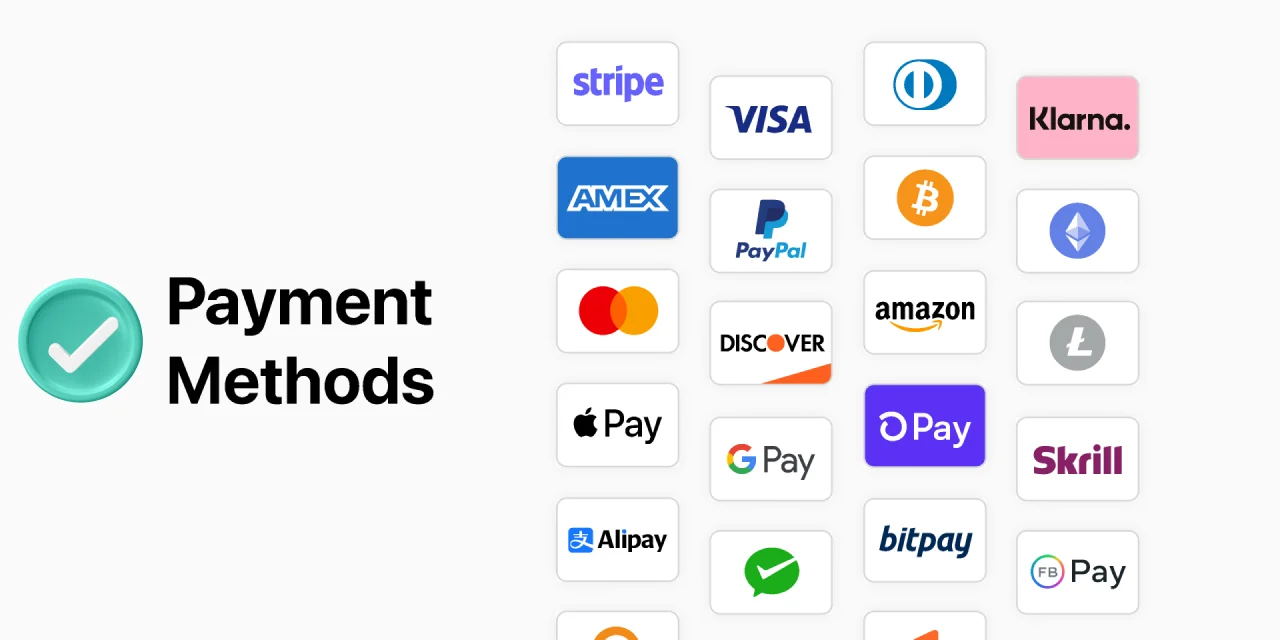
Before customers proceed to checkout, they need access to full information about delivery options and payment methods. Hidden fees must never be added to the price without informing the customer, as this can undermine trust.
To increase conversion, you can also offer buy now, pay later (BNPL) services for paying in installments, as well as the option to pay in cryptocurrency. These additional payment methods can make the buying process more flexible and convenient for customers.
The Checkout Process: The Simpler, the Better
When a user decides to buy and adds a product to the cart, the checkout process should be as intuitive and comfortable as possible. Just like on the product page, the cart summary should show the total cost of the selected items and delivery.
Too many required fields can become a barrier to completing a purchase, so keep their number to a minimum. It is also important to clearly tell shoppers why you are collecting specific data and how it will be used.
Brand Trust
As online shopping grows in popularity, brand trust becomes strategically important and has a significant impact on customers’ purchase decisions.
To place an order, customers need to feel confident that the brand is reliable. Reputation, customer service and product quality play a decisive role in building this trust. In addition, active involvement in community and social initiatives, as well as high standards of security and data protection, also strengthen the bond between the brand and its customers. Together, these elements help build a stable, long-term relationship between the brand and its buyers.
Establishing Expert Status
To increase brand trust and establish expert status, consider creating content for your company blog, YouTube channel or official social media profiles. Publishing on these platforms can strengthen your brand image and build an audience that values your opinion and expertise.
In addition, contributing to authoritative industry websites and portals can significantly strengthen your brand’s status as an expert in its field. Expert publications like these demonstrate competence and attract new audiences, which builds trust in your brand and its authority.
Fast, Responsive Customer Support
Your customers should always have access to an FAQ section, a live chat for quick communication and a contact form on the site for reaching a specialist. Thoughtful, effective customer support plays a significant role in building a positive company image. Providing fast solutions and answers to customer questions creates an impression of reliability and care for customers, which can increase loyalty and brand appeal.

Offer Free Returns
Many internet users still feel uncertain about shopping online, especially when they can’t physically examine a product before buying. High-quality photos and videos don’t always solve this problem. That is why it’s important to offer customers free returns: this adds an extra layer of confidence and reassures them that buying from your online store is safe and reliable. It helps dispel doubts and encourages customers to buy.
Effective Remarketing and Abandoned Cart Recovery
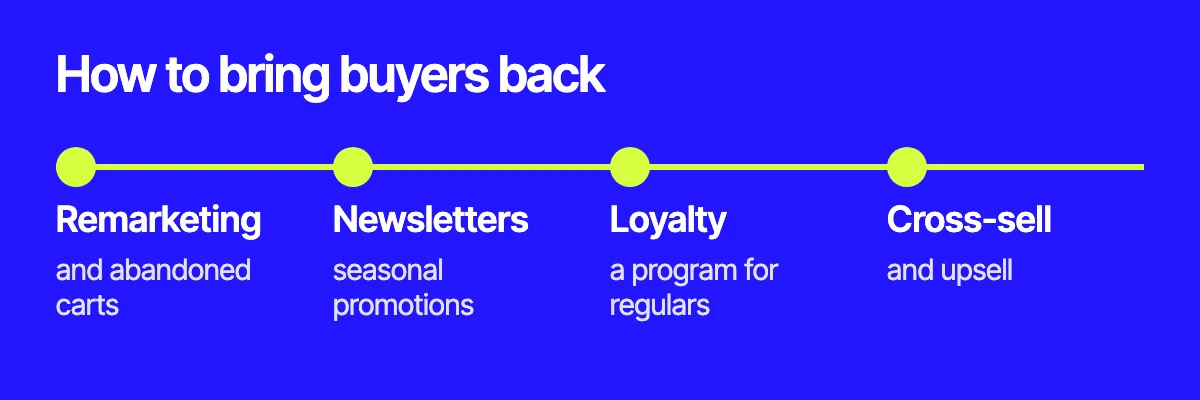
A well-thought-out dynamic remarketing strategy shows users exactly the products they viewed and added to their cart, bringing them back to the site and motivating them to complete the purchase. This powerful tool lets you re-engage customers by reminding them of products they almost bought, delivering high conversion and helping increase sales in your online store.
Seasonal Promotions and Newsletters
Price remains one of the deciding factors in the purchase decision for many consumers. In this context, seasonal promotions and discounts are an effective way to drive more orders in your online store.
Seasonal promotions and newsletters announcing them not only attract shoppers’ attention but also create a sense of a great deal. These marketing tools highlight the appeal of your offer and can significantly increase customer interest in your online store.
Loyalty Program
Ecommerce loyalty programs pursue the same goals as the promotions described in the previous section, but they focus on regular customers and build a community around the brand. Loyalty programs can encourage users to return to the store by offering discounts on their next purchase.

Cross-Selling and Upselling
Offering customers similar and complementary products can make choosing much easier and increase average order value.
Cross-selling means offering complementary products, such as a screen protector or case with a phone. Upselling aims to increase the order value by offering more expensive products than the ones customers bought before.
Continuous Conversion Optimization Is Key to Business Growth
When running an online store, you need to actively work not only on attracting traffic but also on increasing sales conversion. Sometimes even small adjustments and optimizations can significantly raise your conversion rate and, as a result, your profit. That is why you should constantly work on improving your site’s functionality and user experience, especially if you plan to launch an online store on the international market.
Closely monitoring customer behavior and analyzing data will help you identify areas where improvements can significantly increase conversion and make your business more successful.
Frequently Asked Questions About “How to Increase Your Online Store Conversion Rate: 17 Ways”
User-friendly interface
According to Growcode, the average conversion rate of online stores is about 2.27%, while for offline shopping it reaches about 30%. This means that customers visiting physical stores buy 10 times more often than those visiting online stores.
Traditional shopping requires much more effort from customers. When visiting online stores, users expect everything to be as friendly and intuitive as possible, with no need for complex analysis or calculations.
Fast page loading
Load speed is one of the key elements of web page optimization and should be addressed first. If a page takes more than 2-3 seconds to load, it can seriously hurt the user experience, especially in an online store, where users constantly move between categories, filters and products. Slow pages can drive users away from the site. Load speed also affects your rankings in search results, including Google search.
A store that works properly
It is vital that the website works properly, giving users easy access to products and a smooth, glitch-free way to complete their purchase. This means the site must be free of errors, and all core features, such as filtering, image display, product option selection and adding to cart, must work correctly. Even small difficulties at this stage can make a user leave the site, even if they were ready to buy.
Easy navigation and convenient product search
Simplicity and intuitiveness are among the most fundamental and critical factors affecting an online store’s conversion rate. Beyond the site’s visual appeal, which matters a great deal and can affect how long users stay, searching for and browsing products should be as comfortable and effortless as possible.
Responsive design for all devices
Most internet traffic today comes from smartphones and tablets, and this trend keeps growing. It is essential that your store’s pages display correctly at different screen resolutions and that the buying process is just as intuitive as on desktop computers.
Related reading: 12 places where an online store loses buyers; what to check in a UX audit before a redesign; 8 reasons a Laravel store converts poorly.
Leave your contact – we'll reply within one business day wherever suits you.