Contents · 8

An AI chatbot for your website isn’t a trendy button in the corner. It’s a team member who answers instantly, at any hour and always politely. A good bot takes repetitive questions off your team, collects leads overnight and hands people what needs a human decision.
Below: the types of chatbots, where they help, how a bot works with your data and where to start so you don’t waste the budget.
Types of chatbots
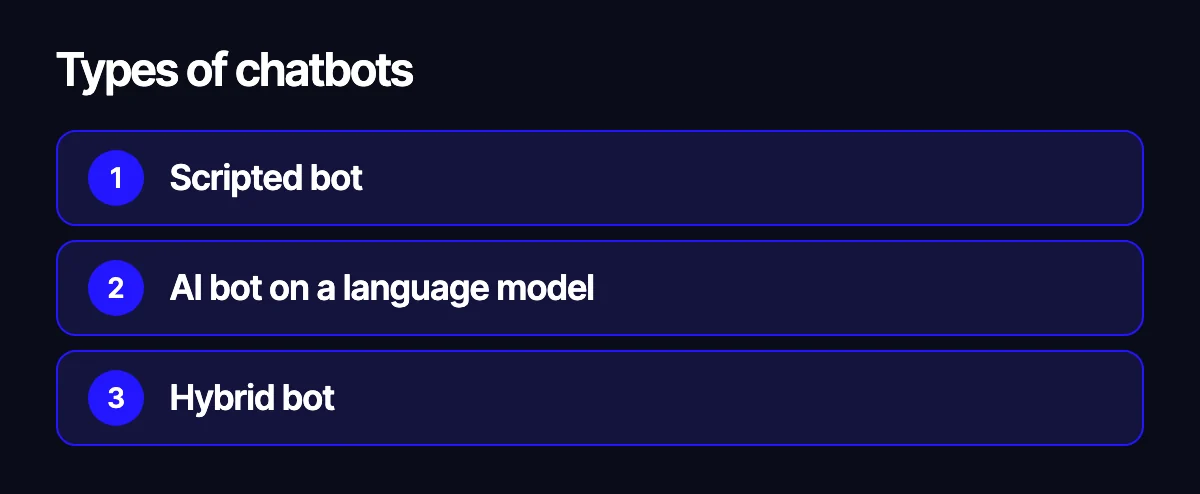
- Scripted bot. Guides people through preset buttons: pick a service, leave a contact, check an order. Predictable and affordable, but it doesn’t understand free-form questions.
- AI bot on a language model. Understands free text and answers in its own words, based on your knowledge base and catalog.
- Hybrid bot. Buttons for common scenarios and AI for everything else. In practice it’s the most convenient option for a business.
Where a chatbot helps
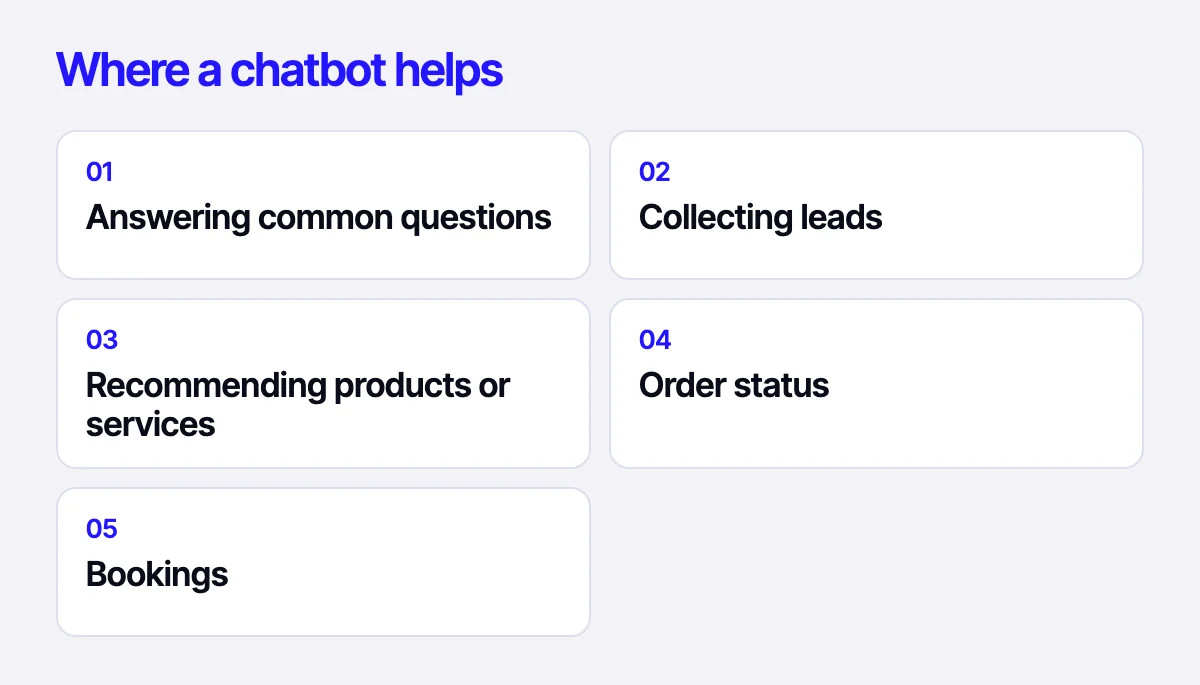
- Answering common questions. Shipping, payment, returns, opening hours.
- Collecting leads. The bot clarifies the task and contact details and sends the lead to your CRM.
- Recommending products or services. A few questions and the person gets suitable options.
- Order status. Customers see where their parcel is without calling a manager.
- Bookings. Free slots, confirmation and reminders.
If you sell through an online store, see what AI can already do in ecommerce in AI assistants for online stores.
Where to put the bot

- A website widget. Meets visitors where they choose and decide to buy.
- Telegram. Good for repeat purchases, notifications and promo codes.
- WhatsApp and Viber. Fit if your customers already message you there.
The same bot can work across several channels if its logic and data live in one place. We’ll cover Telegram bots separately.
How the bot works with your data
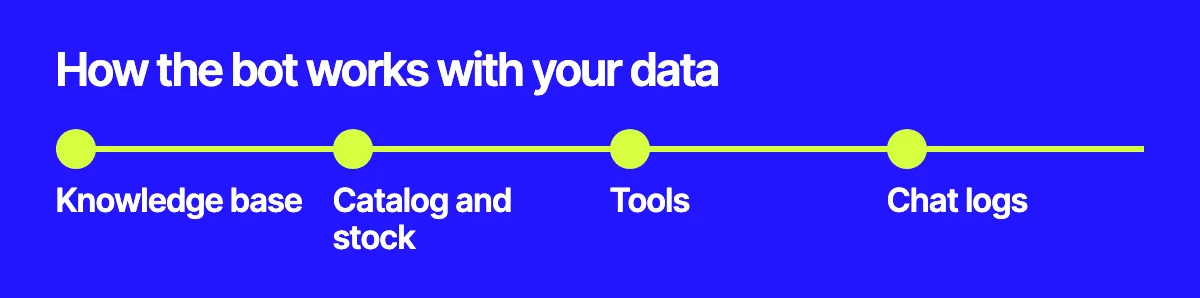
An AI bot shouldn’t answer from memory. Before replying, it finds the relevant piece of your data and relies on it.
- Knowledge base. Policies, terms and answers to common questions.
- Catalog and stock. So it never recommends what you don’t have.
- Tools. Check an order, create a lead, book a time slot.
- Chat logs. To see where the bot goes wrong and fix it.
Limits to know in advance

A bot can make mistakes, especially when data is missing or out of date. So it shouldn’t promise anything your policies don’t cover, and it should hand difficult cases to a person: complaints, disputed returns, large orders. Store and share customers’ personal data only with their consent and only where it’s really needed.
Where to start
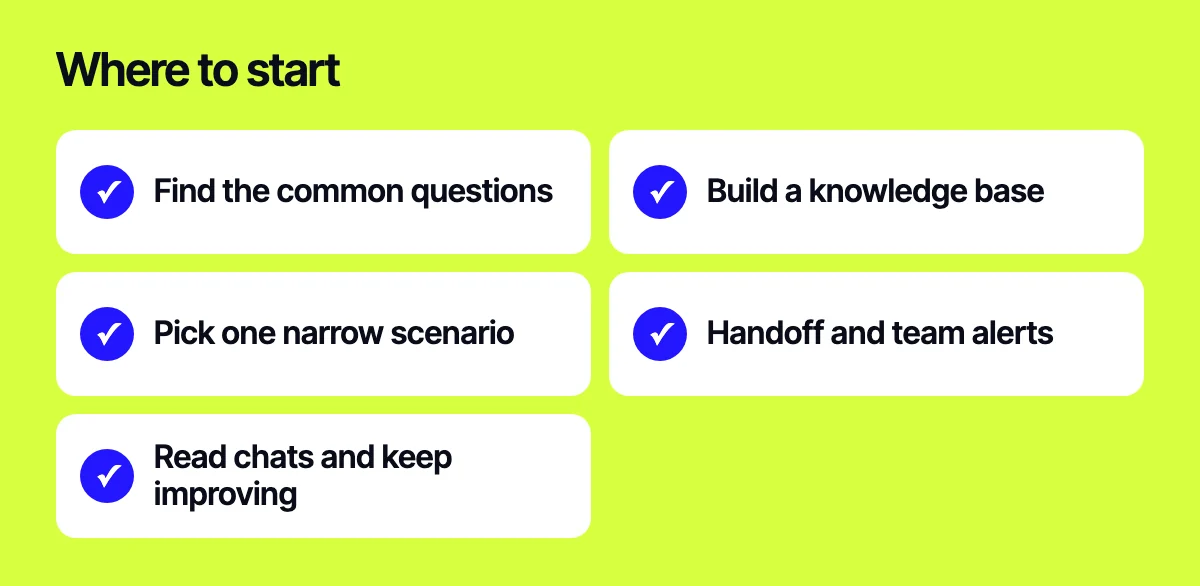
- Export questions from email, messengers and chats and find the most common ones.
- Collect the answers your team already gives into one knowledge base.
- Pick one narrow scenario, such as shipping questions or lead collection.
- Set up handoff to a person and notifications for your team.
- For the first few weeks, read the chats and keep adding to the knowledge base.
What drives the cost

The price isn’t about “making a bot” but about what it has to do: the number of scenarios, channels, integrations with your CRM, catalog and accounting system, languages and the size of the knowledge base. If the bot runs on AI, also budget for language model usage.
Related reading: AI assistants for online stores; how to make a website for business; how to run a seasonal promotion with promo codes in Telegram.
Let’s talk about your bot
Tell us what your customers ask most often – we’ll suggest what to automate first and in which channel. Read more about how we build chatbots and AI assistants. Reach us through the form on the site, on Telegram, WhatsApp or by email.
Leave your contact – we'll reply within one business day wherever suits you.