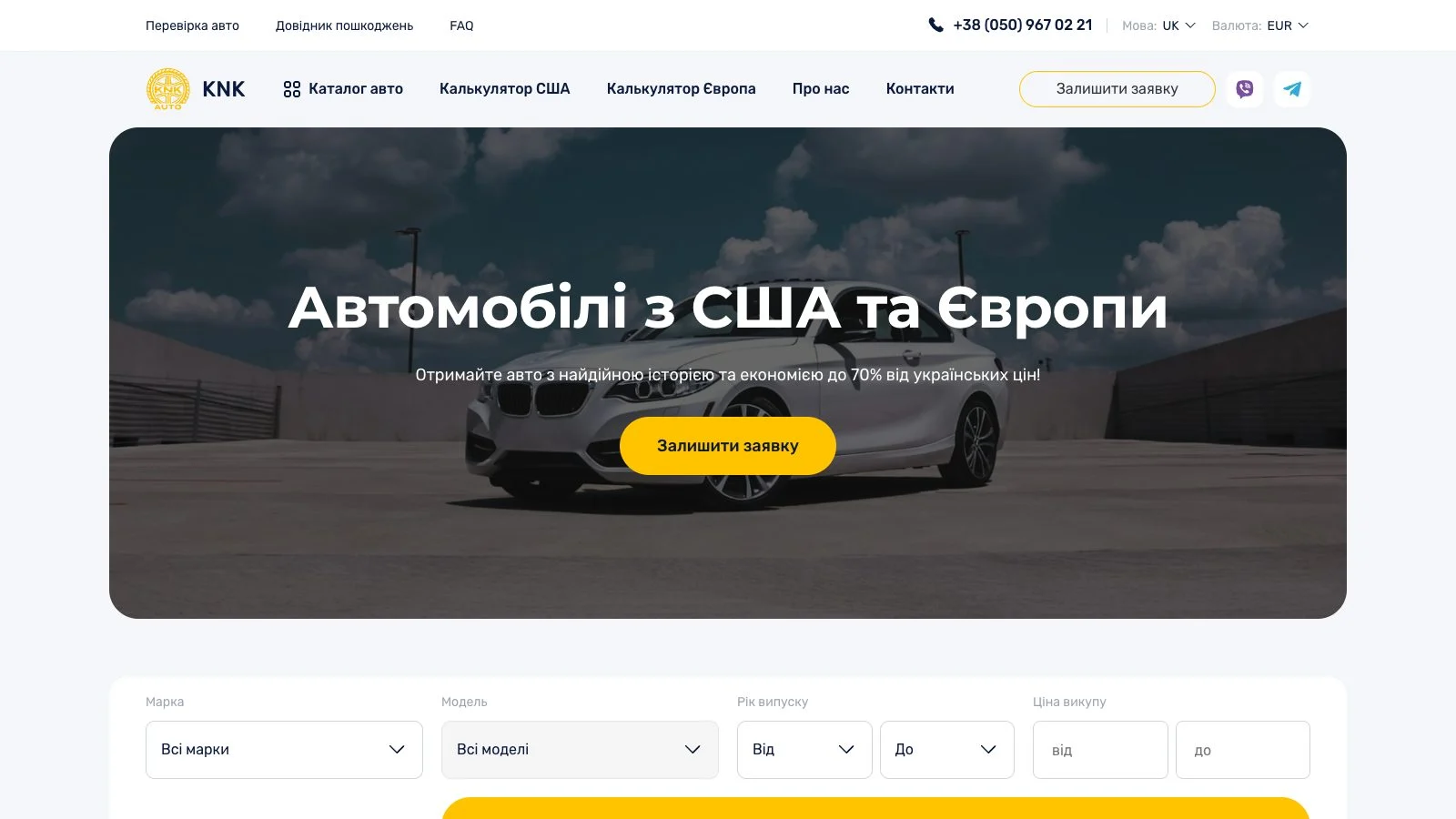
The client needed a live catalogue of real lots that updates without manual entry, not a brochure site with a form. Buyers should see the car, its condition and an estimated landed price in Ukraine at once; managers should get a request tied to a specific lot. We designed the interface, built the site on WordPress with a custom catalogue back end and set up the auction data import.
Visual style
Dark navy type on a light background and a bold yellow for every key action: Leave a request, Show, Consultation. Cards with large photos and rounded corners.
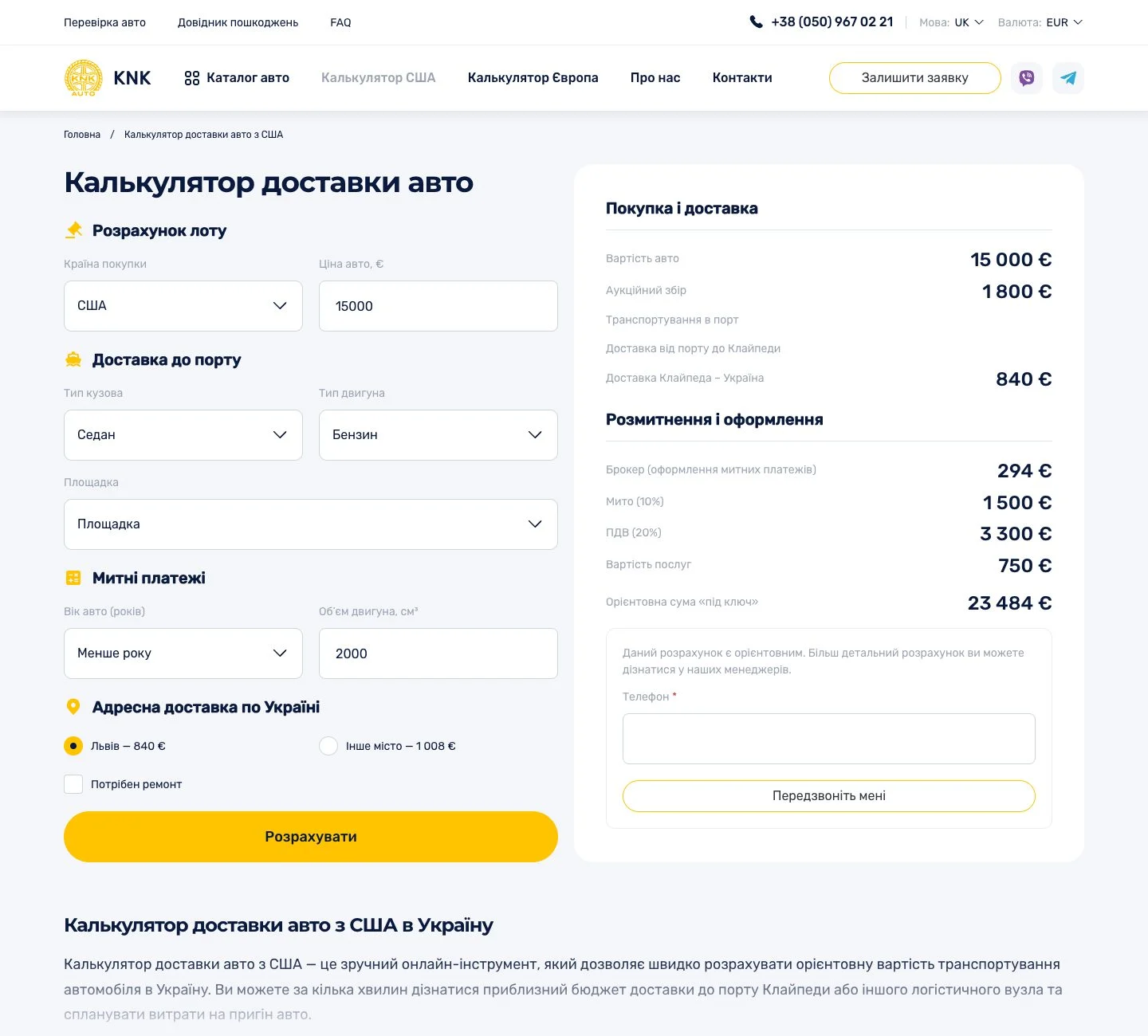
Mobile version
On a phone the filters fold behind one button, lot cards run in a single column, and the price and Consultation button sit right under the photo gallery.

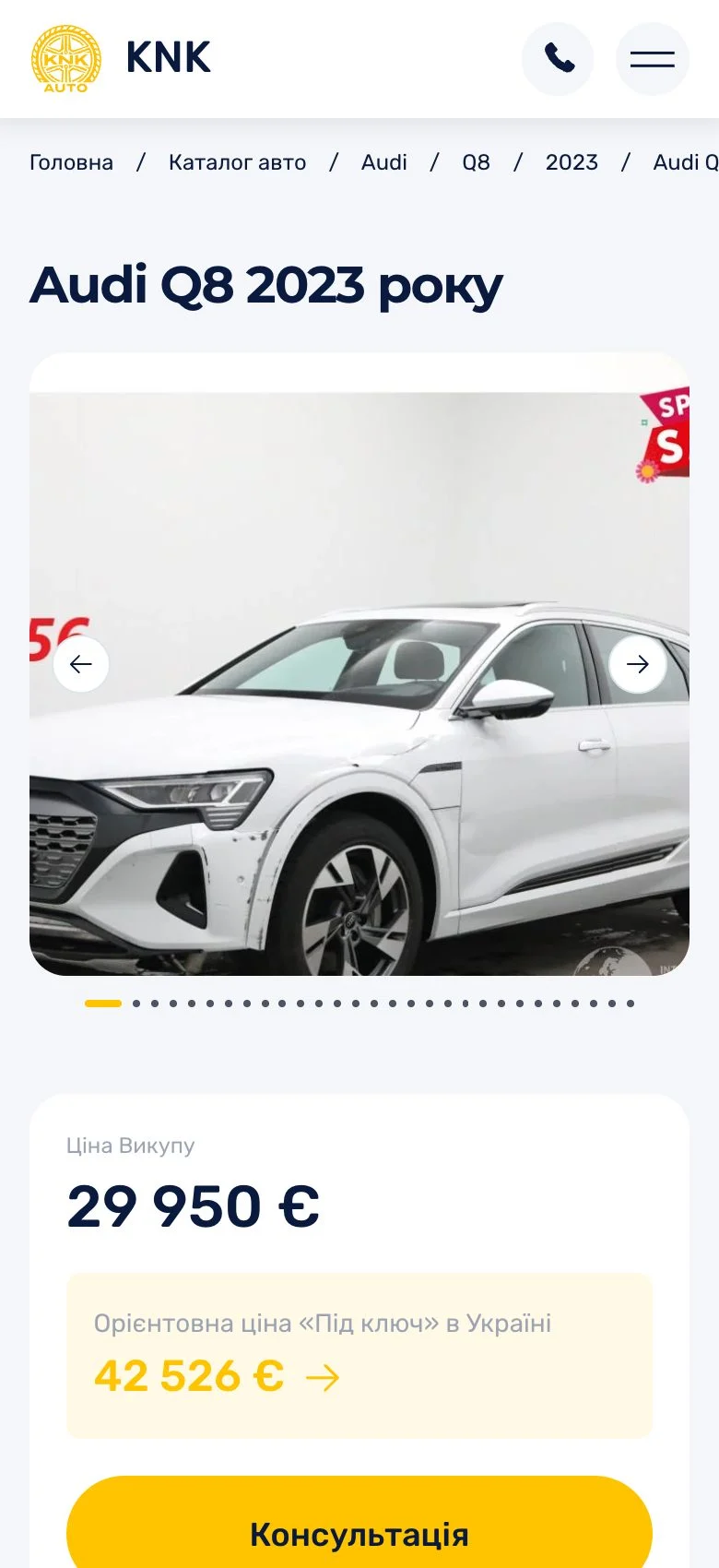
Goals
- 01Fill the catalogue automaticallyPull lots from US and European platforms with no manual entry and keep them current.
- 02Normalise the dataEvery source has its own format; make, model, year, fuel, mileage, gearbox, drive and damage must map to shared fields.
- 03Show the landed priceNext to the auction price, estimate the total cost with shipping and customs.
- 04Turn interest into requestsA short form on every lot and page, plus one-tap messengers.
Key solutions
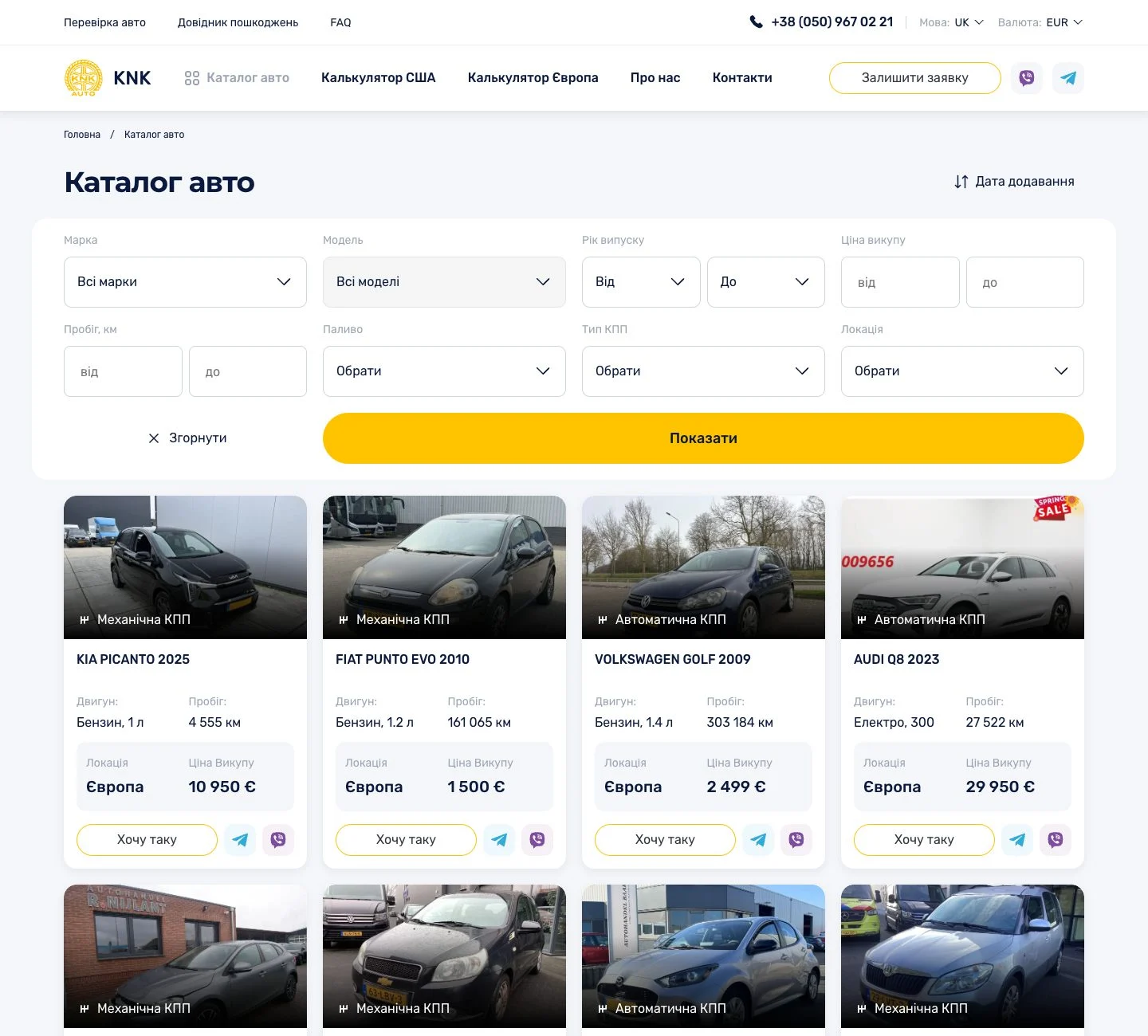
Catalogue and filters
Make and model pages with clean URLs. Quick filter: make, model, year range, auction price. Extended filter: mileage, fuel type, gearbox, location. Sorting by date added, price and mileage, with pagination across hundreds of pages.
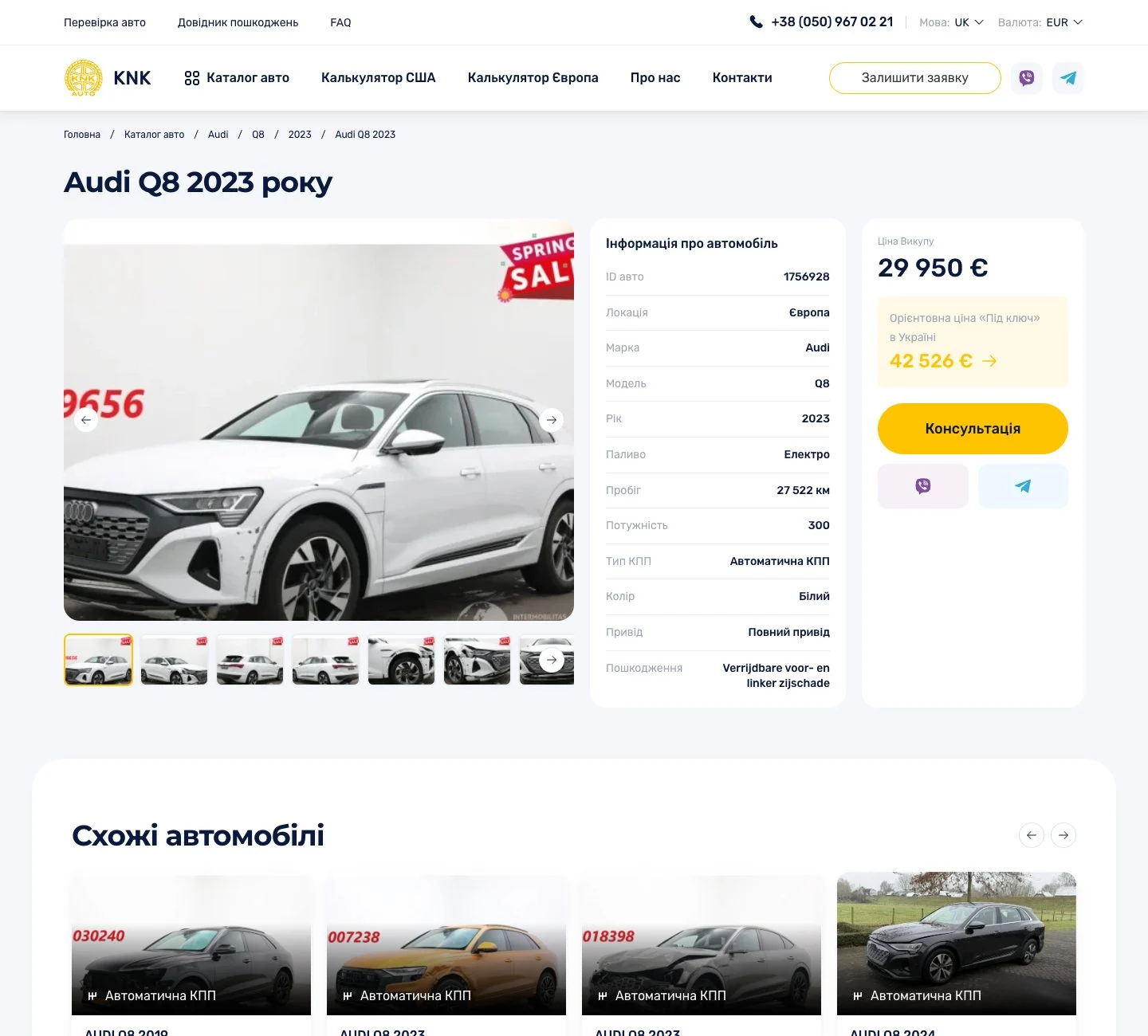
Lot page
Auction photo gallery, vehicle ID, location, make, model, year, fuel, mileage, power, gearbox, colour, drive and damage description. On the right: auction price and estimated turnkey price in Ukraine; below: similar cars and a model FAQ.
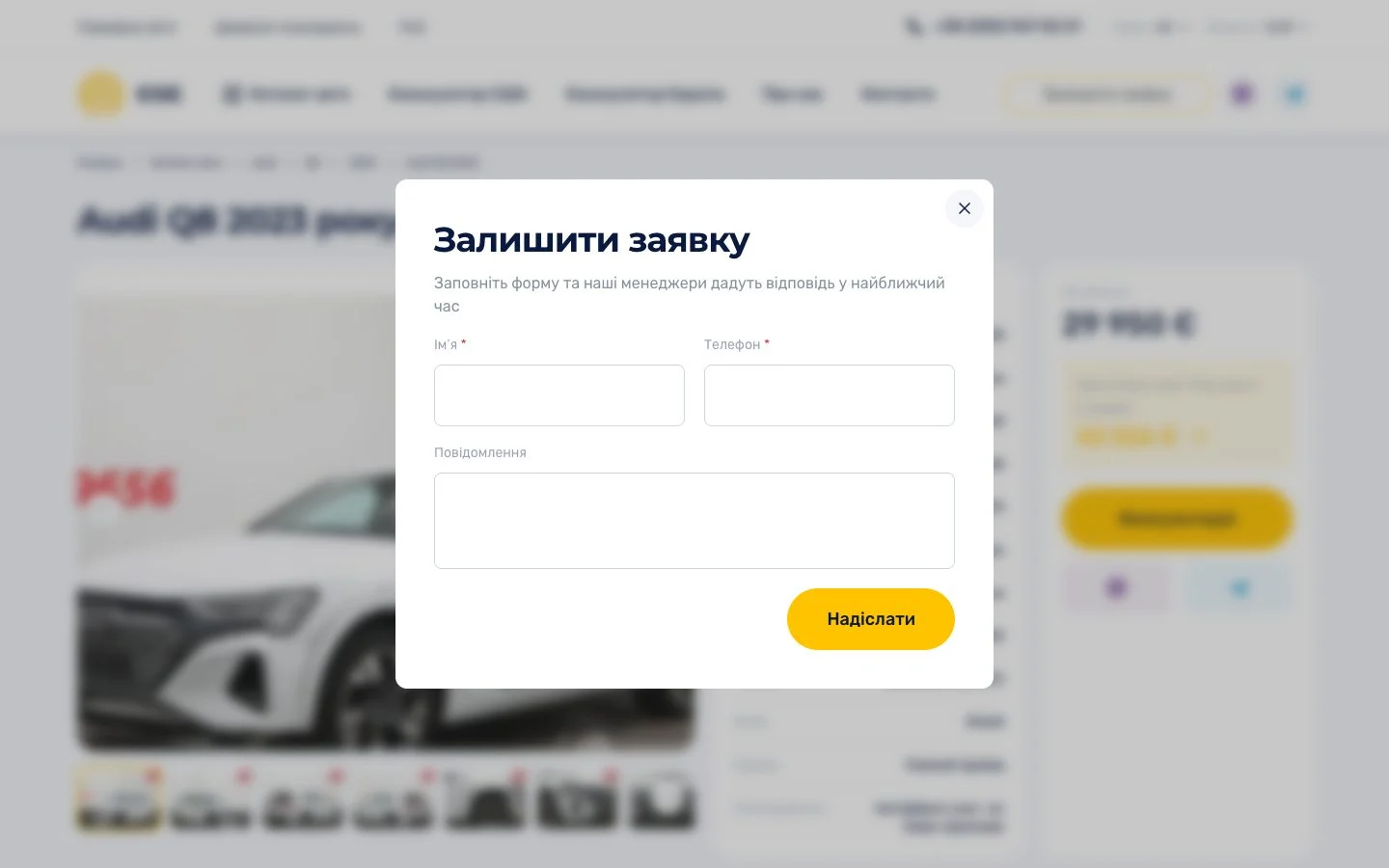
Request flow
"I want this one" and Consultation buttons open a short form: name, phone, message. The request goes straight to a manager. Telegram and Viber buttons sit alongside.
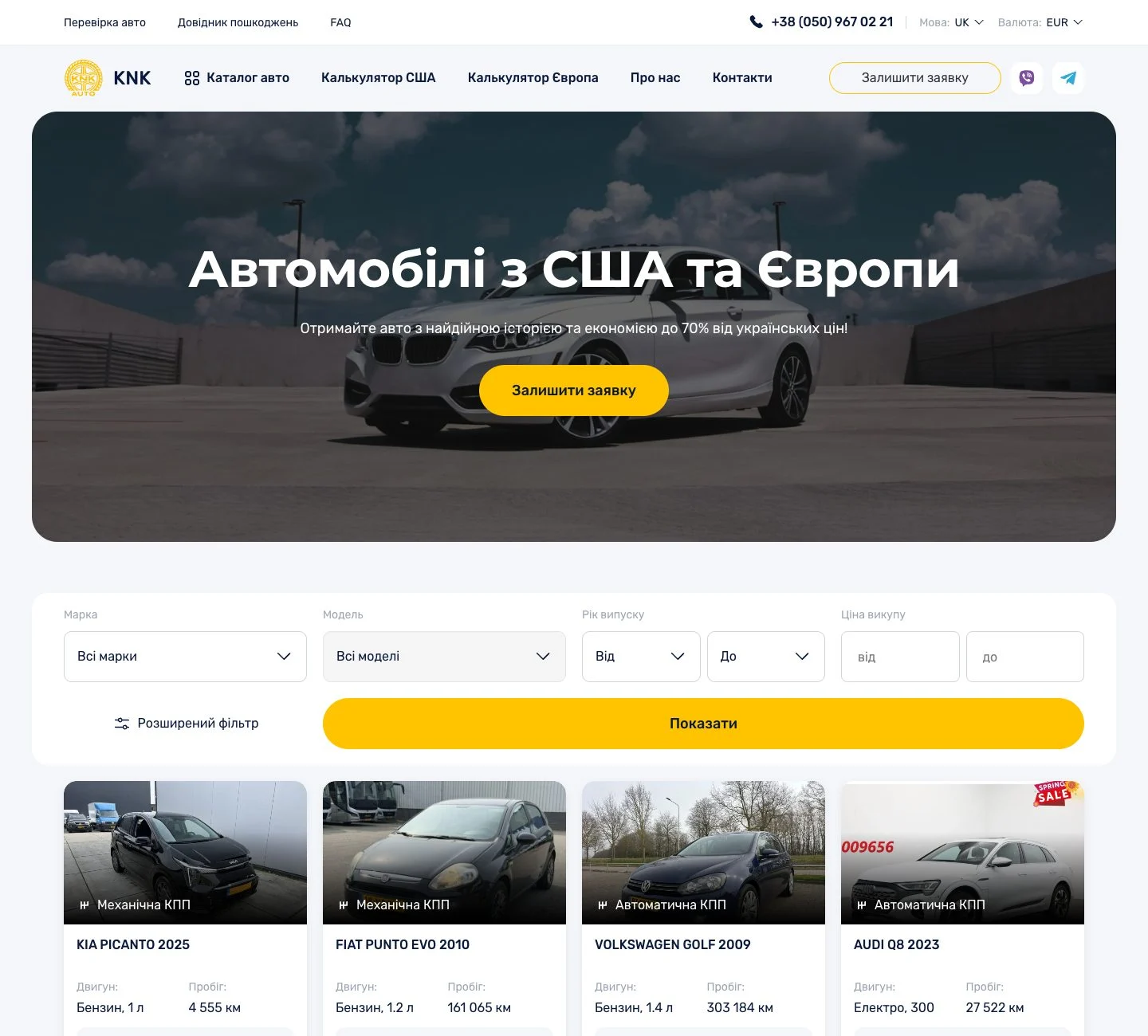
US and Europe calculators
Separate calculators break down a lot's cost: auction fee, shipping to port and to Ukraine, duty, VAT, broker and service fee, based on body type, engine, age and displacement.
How lots reach the site
Scrapers crawl European auctions and listing sites through a proxy pool so they don't hit blocks; these are the lots the site shows today. The US auctions IAAI and Copart are connected via API. The back end maps fields to one format, loads photos and refreshes the catalogue regularly.
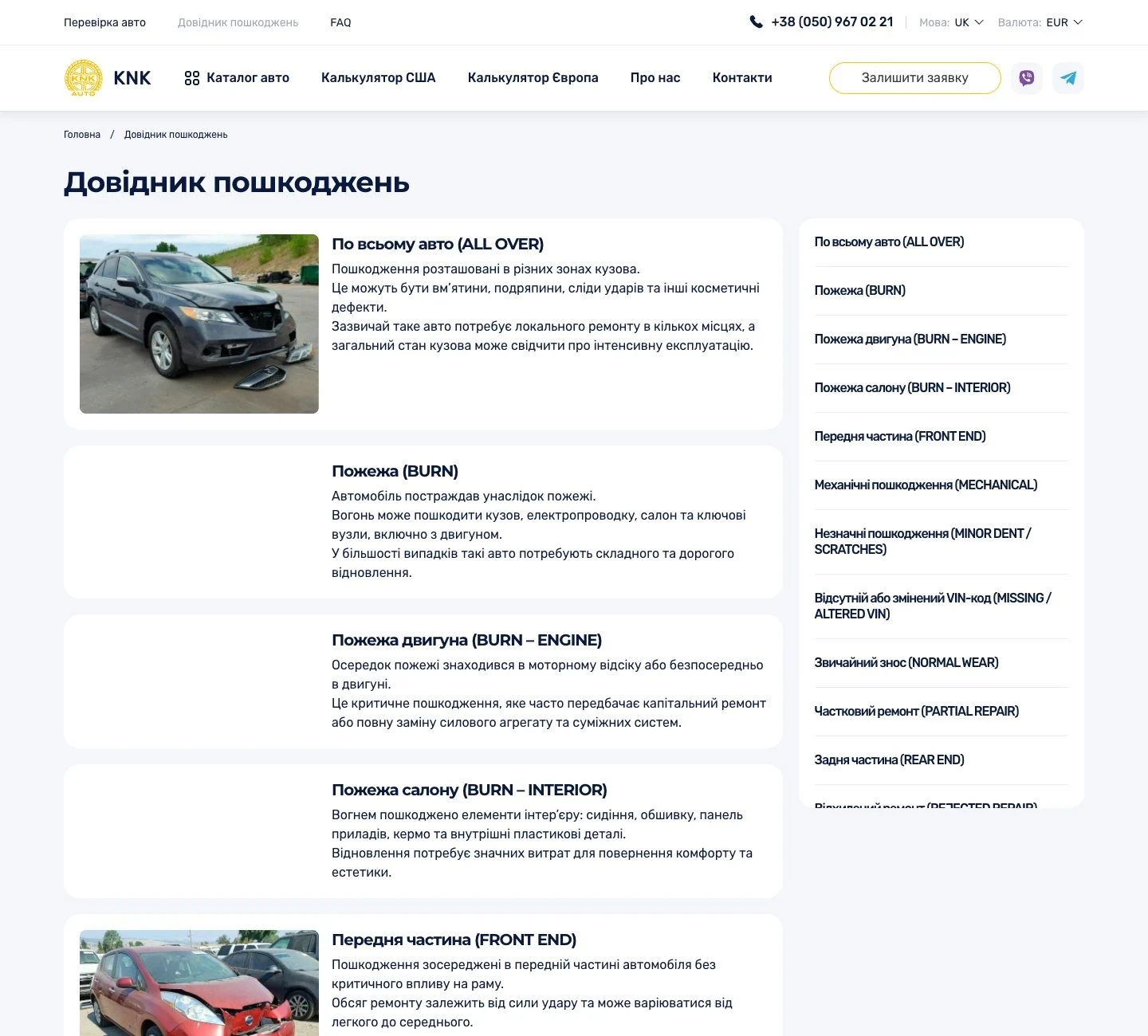
Damage guide
A separate section explains auction damage types with photos, so buyers know what a label on a lot means.
Integrations and stack

Want a project like this?
Describe your task – within one business day we'll reply with questions and a rough timeline estimate.